
If you’ve searched “SEO for wedding planners” already, you’ve probably read three guides that all say the same five things. Optimize your Google Business Profile, get reviews, write blog posts, build backlinks, be patient. All true. None of it explains something simple. The planner ranking above you, with a worse looking website, keeps booking clients you never even see in your inbox.
I’ve spent years building SEO strategy for wedding photographers. Planners are next, and there’s a piece of this nobody else searching this term is telling you about yet.
Why Generic SEO for Wedding Planners Advice Falls Short
Most SEO advice is written to apply to any business, which means it misses what actually makes wedding planning different. Your clients search once and spend a huge amount. They make a decision fast, usually within a few weeks of getting engaged. That’s nothing like a business with repeat, low-stakes purchases.
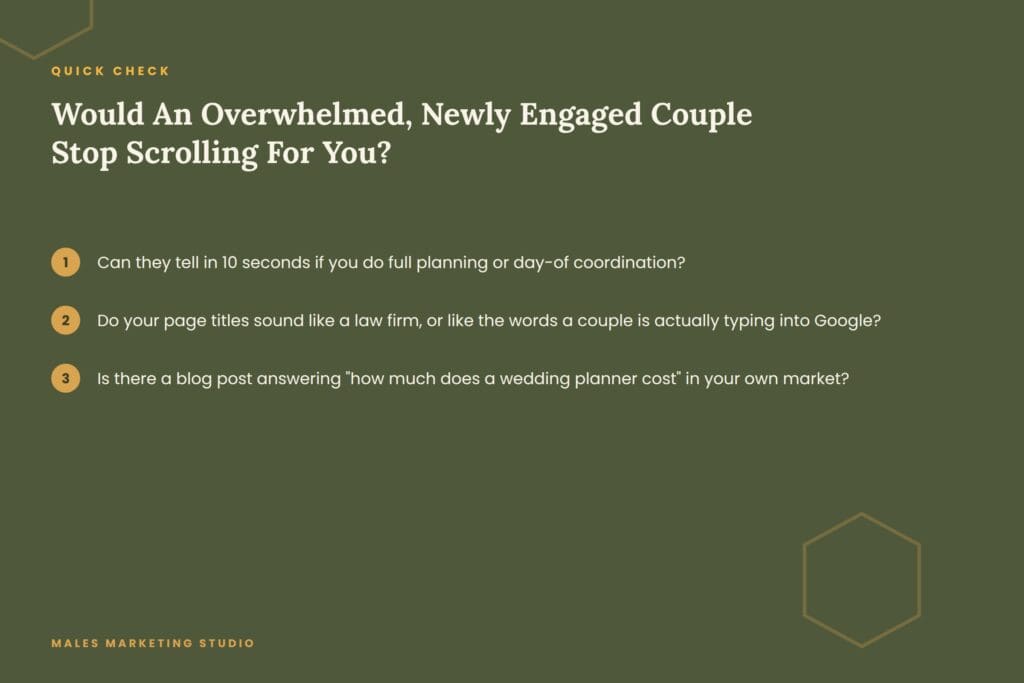
That changes what should matter most. Ranking for “wedding planner” broadly means nothing if a couple can’t tell what you do in ten seconds. Do you handle full planning or just day-of coordination? Do you work their venue type, their budget, their style? Generic SEO advice optimizes for traffic. You need SEO that optimizes for the right couple recognizing themselves immediately.
Is Ranking Even Enough?
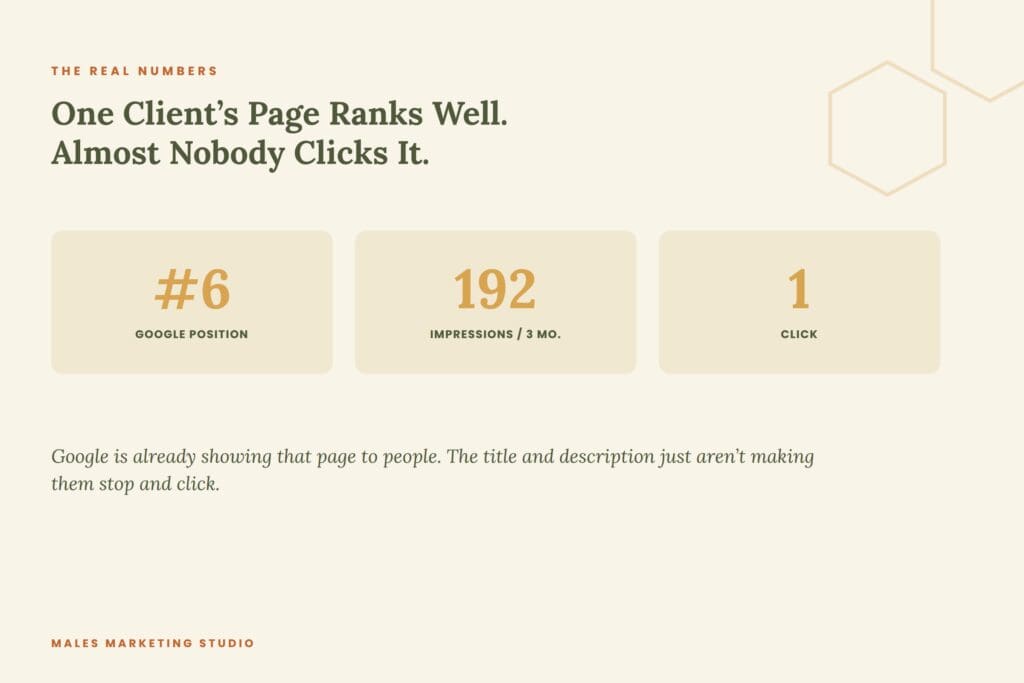
Here’s something worth knowing before you chase rankings. For one of our clients, a page sits at position 6 on Google. It gets 192 impressions over three months, and earned exactly 1 click. Google is already showing that page to people. Almost none of them are clicking.
That’s usually a title and meta description problem, not a rankings problem. If your page titles read like a law firm wrote them instead of like the specific, warm, “yes, this is exactly what I want” language an engaged couple is scanning for, ranking well won’t save you.
Do Wedding Planners Need to Blog?
Yes, and it’s one of the fastest ways to show up for the specific, detailed questions couples are actually typing in, “how much does a wedding planner cost,” “day-of coordinator vs full planner,” “best wedding planner for a barn venue.” Those are searchable, answerable, and almost nobody in this space is writing content that specific.
We’ve seen 100% of our clients rank on Google for at least one niche keyword through consistent, keyword-driven blogging. A planner’s blog does the same job a photographer’s does: answer real questions, show real expertise, and give Google (and couples) a reason to trust you before the first call ever happens.
SEO for Wedding Planners in the Age of AI Search
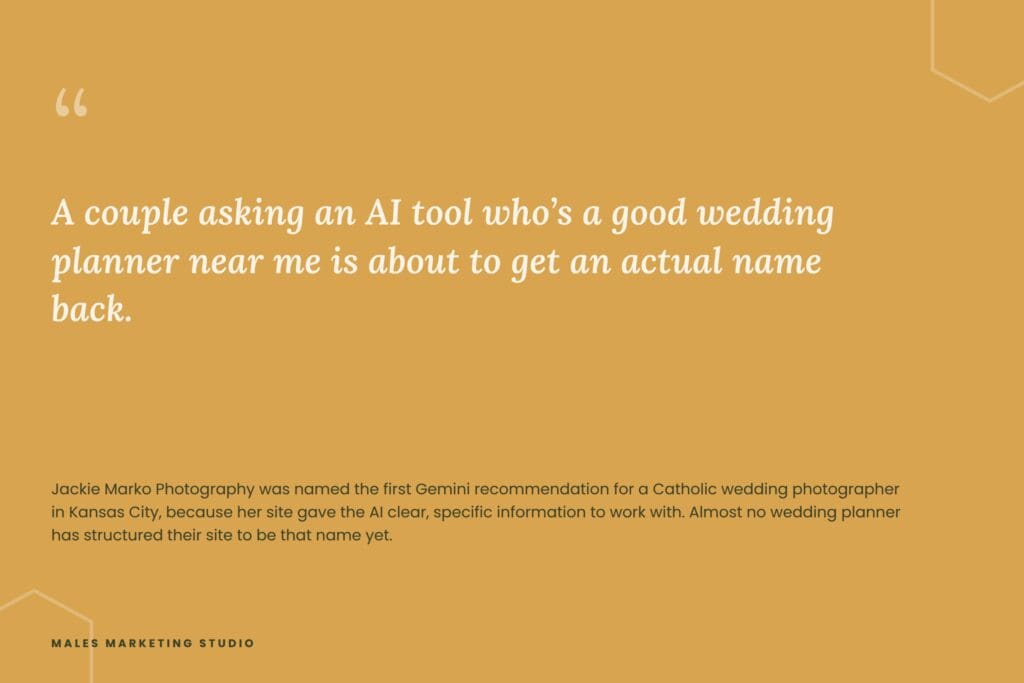
Not one of the guides currently ranking for “SEO for wedding planners” mentions this, which tells you how early this window still is. AI tools like ChatGPT and Google’s Gemini are already recommending specific vendors by name instead of just linking to a search results page. One of our photography clients, Jackie Marko Photography, came back as the first recommendation when someone asked Gemini for a Catholic wedding photographer in Kansas City, purely because her site gave the AI clear, specific information to work with.
A couple asking an AI tool “who’s a good full-service wedding planner near me” is about to get an actual name back. Right now, almost no planner has structured their site to be that name. That’s a genuinely rare kind of head start.
Where to Start This Week
Skip trying to rank for everything at once. Start with your Google Business Profile (we’ve seen an average 300% increase in interactions once it’s actually optimized), then look honestly at whether your page titles and descriptions would make a scrolling, overwhelmed, newly engaged couple stop and click.
If that’s more than you want to untangle solo while you’re actually running weddings, that’s completely fair. This is what I do all day, and I’d love to build it out for your business the same way I’ve done it for wedding photographers for years.
Frequently Asked Questions
Ranking gets you seen. It doesn’t guarantee clicks. A page can rank well and still get almost no traffic if the title and description don’t speak directly to what the searcher wants, which is a common, fixable gap.
Yes. Blogging lets you rank for specific questions couples are searching, like planning costs or coordinator versus full-planning comparisons, and it builds trust before a couple ever books a call.
AEO, or answer engine optimization, means structuring your site so AI tools like ChatGPT and Gemini can confidently recommend your business by name, not just show you buried in a search results page.
Typically 3 to 6 months before real movement, and it compounds after that. Given how fast couples search and decide, an SEO foundation set up now pays off for the whole next engagement season.

